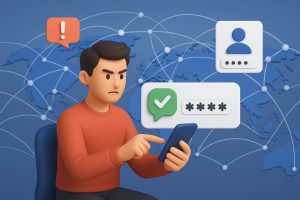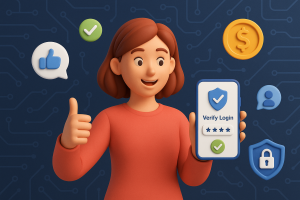
As the digital world expands, travellers and expats face unique challenges when it comes to verifying their online identities. Whether it’s logging into bank accounts, setting up new communication apps, or accessing government services, a mobile number for verification often becomes an essential part of staying connected. Yet, confusion persists about what’s safe, what’s practical, and what’s actually necessary when verifying your identity abroad. Let’s break down the myths and realities—so you can verify smarter, not harder.
Myth #1: Any Local SIM Card Will Work for Verification
Many travellers assume that buying a local SIM card in their new country will solve all verification issues. While that can work for short-term needs, it’s not a universal fix. Some global platforms still require your home country’s phone number for security checks, especially when linked to banks or payment systems. In these cases, relying solely on a local SIM could lock you out of important accounts.
Pros: Easy to obtain, often inexpensive, and ideal for communication within the host country.
Cons: May not be accepted by global platforms or two-factor authentication systems; changing SIMs frequently can disrupt account access.
Myth #2: Virtual Numbers Are Unsafe or Unreliable
Virtual numbers have earned a bad reputation—often unfairly. With reputable providers like Verify Now, a virtual mobile number for verification is secure, flexible, and accessible across borders. These solutions are specifically built for travellers and expats who need to maintain continuity of access wherever they go.
Pros: Global accessibility, no need for physical SIM cards, and robust privacy protections.
Cons: Quality and reliability can vary between providers, and some platforms may not yet support all virtual numbers.
Myth #3: One Number Is Enough for Everything
In today’s multi-platform world, spreading verification across multiple numbers can actually increase security. For instance, you might choose one number for financial accounts and another for social media. This compartmentalization limits exposure if one number is ever compromised.
Pros: Enhanced security, better control over privacy, and easier recovery from potential breaches.
Cons: Managing multiple verification numbers can become cumbersome and requires strategic organization to avoid confusion.
Myth #4: You Should Avoid Sharing Your Mobile Number Online
This advice holds some truth—especially for public posts or unsecured forms—but not when it comes to properly encrypted verification processes. Reputable digital verification services protect your data end-to-end, using encryption and secured authentication channels. The risk isn’t in sharing your number for legitimate verification; it’s in sharing it carelessly with unknown sources.
Pros: Avoids unnecessary exposure of personal information and reduces spam.
Cons: Overcautiousness may hinder access to legitimate services requiring a verified number for account protection.
Myth #5: Verifying with a Mobile Number Is Old-Fashioned
With the rise of biometric authentication, some believe mobile verification is on its way out. However, this couldn’t be further from the truth. Mobile number verification remains the universal standard—integrated deeply into systems worldwide. In fact, it often complements other authentication methods rather than competing with them.
Pros: Widely accepted, provides a quick authentication layer, and serves as a global identity anchor.
Cons: In rare cases, reliance on SMS codes can pose challenges if you’re in low-coverage areas or switching between international networks.
Conclusion: Verification Without Borders
For today’s connected traveller or global resident, understanding verification myths is key to staying secure and informed. The truth is simple: using a mobile number for verification—especially through a trusted provider—can empower your digital life rather than complicate it. By choosing the right tools, you can enjoy seamless access across continents without sacrificing safety or convenience.
Ready to travel smarter and verify safely? Get started today with Verify Now.