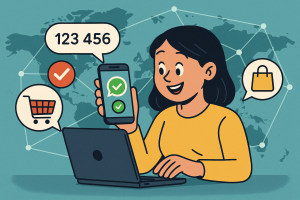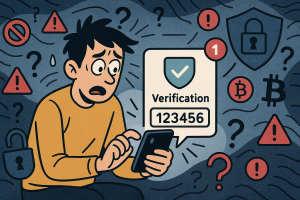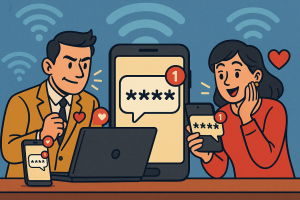
In the ever-evolving landscape of digital innovation, a security mindset is not a luxury—it’s a necessity. As someone who has spent the last decade working with cybersecurity professionals across continents, I’ve seen firsthand how privacy concerns can make or break a digital product. At Verify Now, we’ve made it our mission to put privacy and trust at the core of every interaction. Through global-scale implementations, including secure identity solutions and international OTP delivery systems, I’ve learned that privacy-first is not just a philosophy—it’s a framework that drives results.
Understand the Privacy Expectations of the Digital Consumer
Your users are more privacy-conscious than ever before. In a post-GDPR and CCPA world, digital consumers expect control over their data and transparency about its use. The first step in building a privacy-first experience is understanding these expectations. Cybersecurity professionals must work shoulder-to-shoulder with product teams to bake regulations and ethical considerations into the development lifecycle—rather than treating them as last-minute compliance checks.
From my own experience building fintech authentication platforms for emerging markets, customers are more likely to complete onboarding when the process highlights privacy, not asks them to sacrifice it. Transparency is not a technical challenge—it’s a UX opportunity.
Design for International Scale, Respecting Local Privacy Laws
Scaling digital products across borders introduces a patchwork of privacy regulations. From GDPR in Europe to PDPA in Thailand, each region has distinct requirements. Yet one truth remains universal: users want secure access without friction. Building systems that remain compliant—and delightful—I’ve relied heavily on modular architecture.
By decoupling data processing, localization, and international OTP delivery into compliance-conscious service layers, we future-proofed our products. For example, by routing OTPs only through localized channels vetted by country regulations, we didn’t just meet legal standards—we earned customer trust.
Zero Trust Begins at Onboarding
We often talk about Zero Trust in enterprise networks, but its principles are equally important in user experiences. Trust must be earned—not given by default. That’s why user onboarding is such a crucial moment. Here’s what I’ve learned from implementing secure KYC flows at national scale:
- Start small: Ask only for the data you absolutely need. Collecting excess information is a red flag for end-users—and a liability.
- Assume breach: Design systems around the idea that compromise is inevitable. Encryption-in-transit and at rest is table stakes. Context-aware, real-time risk assessment is the future.
- Use OTPs to authenticate—not identify: A correctly delivered one-time password is a powerful gatekeeper. But don’t confuse it with proving who someone is. Use layered approaches to validate identities without overburdening them.
Make International OTP Delivery Reliable and Instant
One of the most underrated privacy threats is failed or delayed OTP delivery. Every minute a user waits for an OTP, their trust degrades. Worse, they may abandon the process altogether. That’s where systems like Verify Now’s international OTP delivery come in.
In my time leading authentication rollouts in sub-Saharan Africa and Southeast Asia, we had to contend with poor network infrastructure and unreliable local gateways. We learned to intelligently route OTPs through prioritized carriers, retry logic, and fallbacks like email or in-app alerts. The lesson? OTP delivery isn’t a back-office function—it’s a frontline user experience.
Privacy-Focused Culture Starts with Your Team
You can’t build user trust if your internal culture doesn’t value privacy. Across every organization I’ve worked with—bank, insuretech, ecommerce—the most secure teams were the ones that held privacy as a cultural value, not just a compliance duty.
This means regular threat modeling, red-team simulations, privacy reviews embedded in sprint cycles, and promoting privacy champions across departments. At Verify Now, we don’t just train developers—we mentor leaders to evangelize privacy-first thinking across the business.
Audit Everything, Assume Nothing
I once worked with a startup that unknowingly exposed customer birthdates via a misconfigured search API. No breach occurred—but the reputational risk was enormous. What prevented disaster was our internal audit system, which flagged the anomaly within hours.
The takeaway? Build structured audits into your DevOps lifecycle. Use automated tools to detect misconfigurations. Periodically test your OTP infrastructure, delivery mechanisms, and access logs. A privacy-first experience isn’t something you ship once—it’s something you defend every day.
Let Customers Control Their Privacy
One of the most empowering decisions you can make is to give customers control of their own data. This goes beyond cookie banners. It means providing real-time access to view, delete, or export their data. Letting users set preferences on authentication frequency. Allowing them to revoke device access instantly.
Clients of Verify Now have seen measurable increases in customer retention—and decreases in support tickets—after implementing user-facing privacy dashboards. Empowerment builds affinity. Users stay where they feel in control.
Conclusion: From Philosophy to Practice
Privacy is no longer just a technical consideration. It is a product principle, a brand promise, and a moral responsibility. As cybersecurity professionals, we’re in the driver’s seat to shape a new era of digital trust. The tactics I’ve shared here—from scalable international OTP delivery to onboarding with Zero Trust—are more than experiences. They’re battle-tested principles that helped our partners secure millions of users across geographies.
Now it’s your turn. It starts with asking difficult questions, choosing the right architectures, and learning from others in the field. At Verify Now, we’ve helped organizations of all sizes move from good intentions to great implementation. See customer success stories and discover how privacy-first design can redefine your digital offering.